Modern vehicles are no longer defined primarily by mechanical systems.
They are increasingly shaped by software architecture, centralized computing, sensor fusion, connectivity platforms, and continuous feature evolution.
In Software-Defined Vehicle (SDV) programs, this shift is not limited to software development — it is fundamentally changing how vehicles are engineered, integrated, validated, and maintained throughout the product lifecycle.
The Shift Toward Software-Defined Vehicle Architectures
Traditional automotive platforms were built around distributed Electronic Control Units (ECUs), where individual controllers managed relatively isolated vehicle functions.
Today, Software-Defined Vehicle architectures are increasingly moving toward:
- Centralized computing platforms
- Domain and zonal controllers
- Shared software services
- Cross-domain communication layers
- Cloud-connected vehicle ecosystems
These architectures enable faster feature deployment, improved scalability, and continuous software evolution.
However, they also increase interdependency across vehicle systems.
Functions that were previously isolated now rely on shared processing resources, synchronized software behaviour, and tightly coordinated interface management.
This fundamentally changes how vehicle programs are engineered — shifting from isolated subsystem development to continuous system-level integration.
Why System Integration Complexity Is Increasing
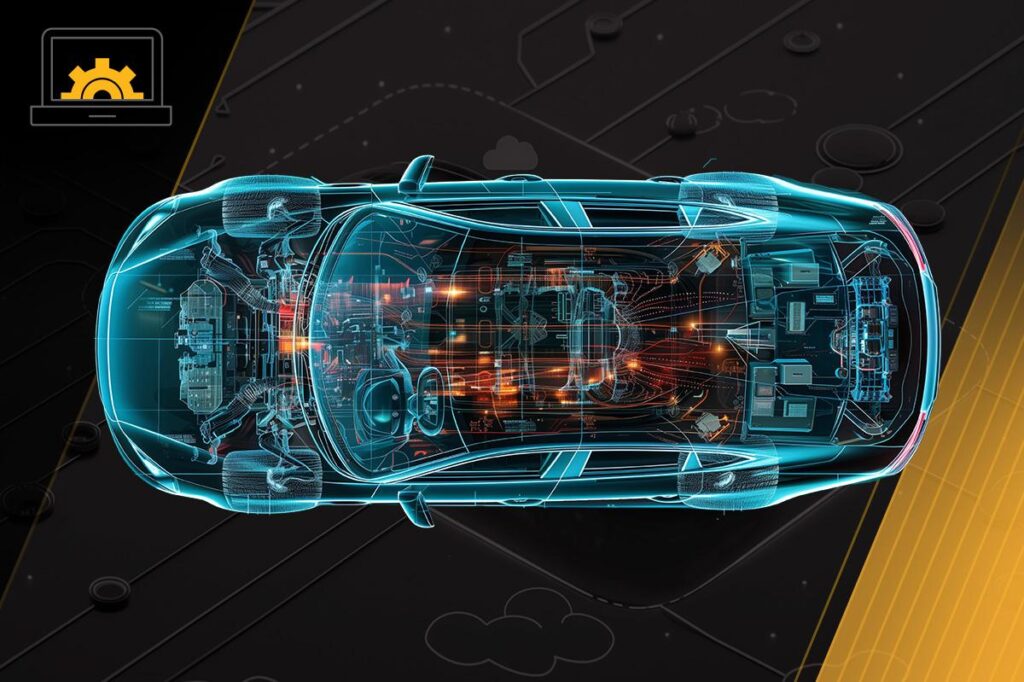
Software-Defined Vehicle architectures introduce significantly greater interaction between mechanical, electrical, electronic, and software systems.
Key challenges include:
- Cross-domain dependencies between vehicle functions
- Asynchronous hardware and software development cycles
- Growing reliance on multi-supplier ecosystems
- Increasing complexity of interface management
These are no longer isolated engineering challenges — they are becoming standard conditions across modern automotive development programs.
Cross-Domain Dependencies
Modern vehicle functions increasingly depend on coordinated interactions across multiple engineering disciplines.
For example:
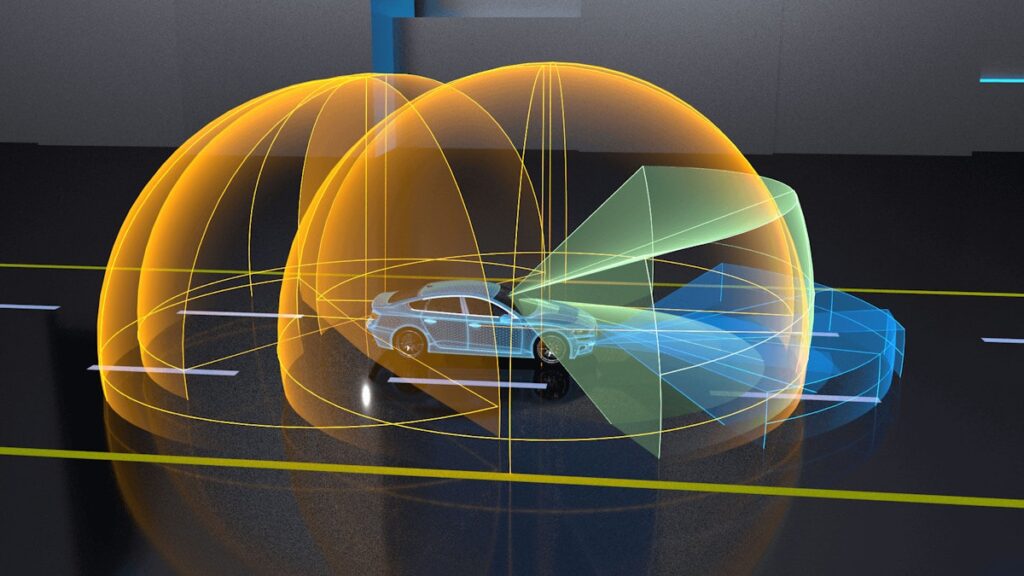
- ADAS systems integrate sensors, compute platforms, vehicle dynamics, networking, and software logic.
- Battery management systems interact with thermal management, power electronics, and control software.
- Infotainment systems combine connectivity, cybersecurity, cloud services, and user interface frameworks.
As systems become more tightly coupled, validating individual subsystems independently is no longer sufficient to ensure reliable vehicle performance.
Asynchronous Development and Supplier Coordination
Hardware and software development no longer progress at the same pace.
Different engineering teams, suppliers, and software modules often mature independently throughout the program lifecycle.
As a result:
- Interfaces may remain unstable during integration.
- Validation timelines may shift repeatedly.
- Regression risks increase with every software iteration.
- System-level behaviour becomes increasingly difficult to predict.
Modern SDV programs also depend on contributions from semiconductor suppliers, software vendors, embedded systems providers, sensor manufacturers, and cloud platform providers.
Without structured interface governance and systems coordination, integration complexity increases rapidly.
Why Late Validation No Longer Works
Traditional automotive development often relied on major integration and validation activities occurring late in the program lifecycle.
In Software-Defined Vehicle environments, this approach introduces increasing levels of risk.
By the time full-system integration begins:
- Software dependencies may already be deeply embedded.
- Interface inconsistencies may affect multiple engineering domains.
- Validation cycles may become compressed.
- Issue resolution costs may escalate significantly.
Integration can no longer be treated as a final-stage activity.
Instead, it must become a continuous engineering process throughout development.
The Growing Importance of Systems Engineering
As vehicle architectures become increasingly interconnected, systems engineering disciplines are becoming more critical to program execution.
Key engineering practices include:
- Early interface definition.
- Requirements traceability.
- Cross-domain architecture coordination.
- Model-Based Systems Engineering (MBSE).
- Continuous integration workflows.
- Simulation-driven validation.
- Software-in-the-Loop (SIL) and Hardware-in-the-Loop (HIL) testing.
These practices help engineering organizations maintain system alignment while managing increasing architectural complexity.
Continuous Validation Throughout the Vehicle Lifecycle
Software-defined architectures introduce continuous change throughout the operational life of a vehicle.
Over-the-air (OTA) updates, cybersecurity patches, feature enhancements, and software revisions continue even after production.
As a result, engineering teams increasingly require:
- Continuous regression testing.
- Automated validation pipelines.
- Real-time monitoring capabilities.
- Data-driven issue detection.
- Lifecycle-oriented systems management.
Validation is no longer limited to pre-production activities.
Instead, it becomes an ongoing engineering capability that supports the vehicle throughout its operational lifecycle.
Software-Defined Vehicles as Complex Engineering Systems
Software-Defined Vehicle programs share many characteristics with other complex engineering domains:
- High system interdependency.
- Multi-disciplinary engineering coordination.
- Multi-supplier development environments.
- Continuous software evolution throughout the product lifecycle.
This makes systems engineering principles essential for maintaining alignment across increasingly complex vehicle architectures.
The shift is clear: automotive engineering is no longer about developing individual subsystems, but about continuously integrating complex systems throughout the vehicle lifecycle.
Conclusion
Software-Defined Vehicles are fundamentally reshaping how modern automotive systems are engineered.
As software becomes increasingly central to vehicle functionality, system integration is emerging as one of the defining engineering challenges of modern vehicle programs.
Organizations that apply structured engineering practices — particularly in interface management, systems engineering, continuous integration, and lifecycle validation — are better positioned to manage increasing architectural complexity.
However, successful engineering execution now depends on more than delivering individual components. Engineering teams must ensure that mechanical, electrical, electronic, and software systems evolve together as a coordinated vehicle ecosystem.
In Software-Defined Vehicle programs, continuous system integration is no longer optional — it is becoming the baseline requirement for successful engineering execution.
Author Bio
Vhyvhitavya Vadlamani is a Business Development and Engineering Strategy professional at SWAX Engineering, with experience across automotive systems integration, engineering execution, and cross-domain coordination. His work focuses on connecting engineering capability with evolving industry challenges across automotive, aerospace, and industrial sectors.