Modern buildings are no longer passive structures enclosing functional space. They are increasingly becoming complex, interconnected systems. Mechanical, Electrical, and Plumbing (MEP) services—along with monitoring and control infrastructure—form the backbone of functionality, safety, and sustainability in modern buildings. For architects, engineers, and constructors, this growing complexity means that traditional coordination methods are no longer sufficient.
This is where BIM‑driven MEP engineering becomes a transformative approach.
Why MEP Is the Most Complex Discipline in Modern Construction
MEP system design faces unique challenges in modern construction projects:
- MEP systems must occupy limited ceiling and service spaces
- Multiple systems intersect across mechanical, electrical, and structural trades
- Designs must comply with strict regulatory and safety codes
- System decisions directly influence energy performance and operational costs
Even minor clashes between ducts, pipes, cable trays, and structural members can result in costly site rework. Early identification and resolution of clashes protects project schedules, reduces rework, and improves overall cost control.
The Role of BIM in MEP Coordination
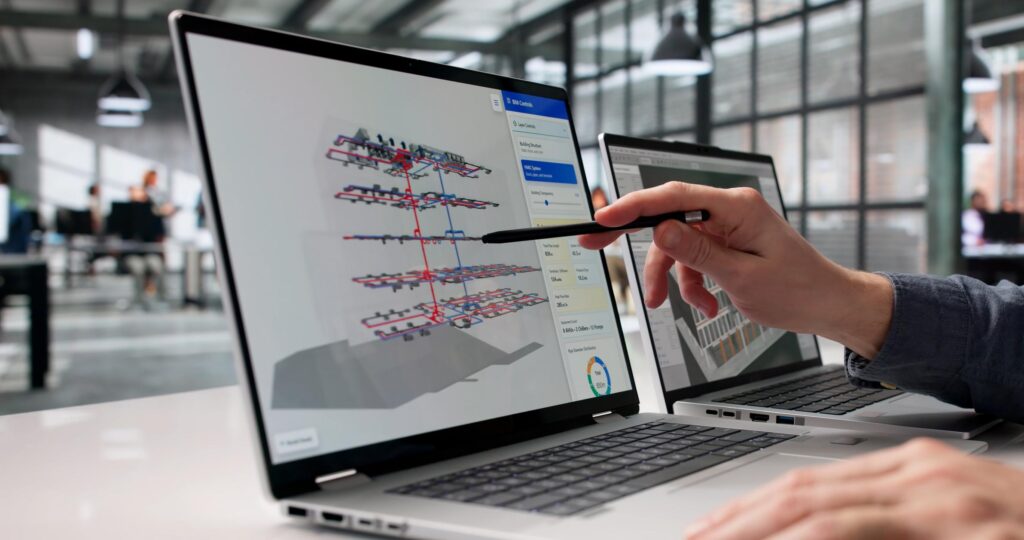
Building Information Modeling (BIM) enables a fully integrated 3D environment where building systems can be modeled with precision before construction begins. Engineers can coordinate mechanical, electrical, plumbing, and fire protection systems within the same digital environment.
Examples of systems modeled within BIM environments include:
- HVAC systems including ducts, sensors, supports, fans, and heat exchangers
- Electrical systems including lighting fixtures, conduits, cable trays, and distribution components
- Fire protection systems including detectors, alarms, suppression systems, and fire‑rated elements
- Plumbing networks including potable water supply, drain‑waste‑vent systems, stormwater systems, and fixtures
BIM moves problem solving from the construction site to the digital design environment.
Key Advantages of BIM‑Driven MEP Engineering
- Early clash detection
- Optimized routing of services
- Reduced rework during construction
- Accurate quantity take‑offs
- Improved installation sequencing
By identifying coordination conflicts early in the design phase, BIM significantly reduces uncertainty during construction.
The Progression from 3D Modeling to 5D Intelligence
Modern BIM workflows extend beyond geometry and visualization. Advanced MEP coordination incorporates additional dimensions of project information:
- 3D – Coordinated system modeling
- 4D – Time and scheduling integration
- 5D – Cost and quantity integration
This integration enables more predictable project timelines, improved cost control, and better data‑driven decision making.
Energy Efficiency and Sustainable MEP Design
MEP systems play a critical role in achieving sustainability goals in modern buildings. Design decisions in HVAC systems, lighting distribution, and water management significantly influence long‑term building performance and environmental impact.
BIM enables performance simulation before physical installation, helping teams evaluate energy consumption, thermal performance, and system efficiency early in the design process.
Common Challenges in MEP Projects
Despite advances in digital design, many projects still face challenges such as:
- Incomplete coordination between disciplines
- Late‑stage design changes
- Poor inter‑disciplinary communication
- Non‑standardized workflows
A structured BIM methodology helps eliminate many of these inefficiencies by introducing clear coordination processes and shared digital models.
Engineering Discipline in BIM‑Based MEP Delivery
Successful BIM‑based MEP execution depends on several key factors:
- Strategic planning through clear BIM execution plans and coordination milestones
- Workflow‑driven processes with defined responsibilities and model sharing protocols
- Accurate modeling supported by validation checks and level‑of‑detail compliance
- Experienced engineering oversight to ensure coordination accuracy
When these elements align, MEP delivery becomes more predictable and efficient.
The Future: Smart and Digitally Integrated MEP
Several emerging trends are further transforming the field of MEP engineering:
- Digital twin technologies
- IoT‑enabled building systems
- Prefabrication‑ready MEP models
- AI‑assisted clash detection
- Automated quantity extraction
MEP design is gradually shifting from installation‑driven workflows toward data‑driven engineering approaches.
As buildings become increasingly complex, digitally coordinated MEP engineering will play a central role in delivering safe, efficient, and sustainable infrastructure.
Author Bio
Aditi Kane is an architect specializing in BIM‑enabled building design and MEP coordination. Her work focuses on integrating architectural intent with engineering systems through structured BIM workflows, enabling improved design clarity, coordination efficiency, and building performance outcomes.