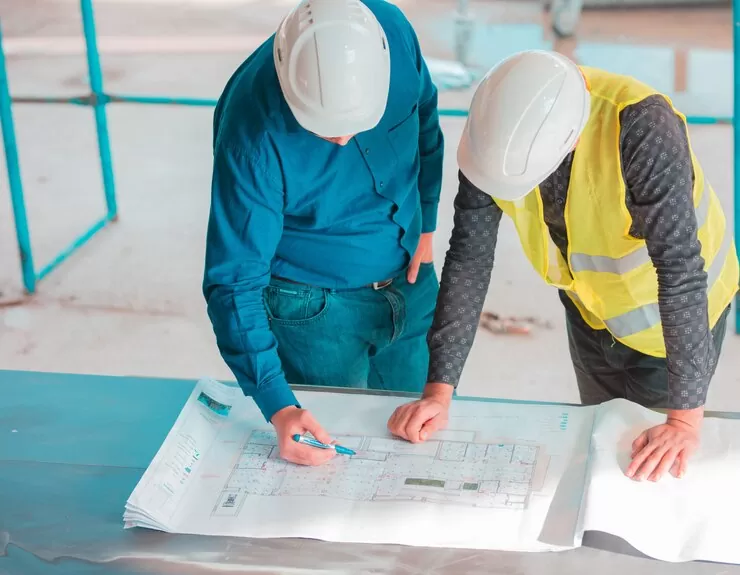
Modern MEP execution is no longer shaped by a single trend. It is being reshaped by the convergence of digital acceleration and workforce constraints.
The construction industry in 2026 is being defined by two powerful forces: rapid advancement in digital engineering and persistent shortages of skilled labor. For MEP contractors, these forces are deeply interconnected. Together, they are transforming how projects are designed, coordinated, fabricated, and delivered.
What was once considered innovation is quickly becoming operational necessity.
Top BIM Trends Shaping MEP Execution in 2026
AI-Driven Coordination and Predictive Clash Detection
Artificial intelligence is transforming BIM from a reactive coordination tool into a predictive engineering platform.
Clash detection is no longer limited to geometry. AI-enabled workflows can now identify:
- constructability risks
- sequencing conflicts
- performance inefficiencies
Contractors using AI-integrated BIM are reducing rework, accelerating approvals, and improving cross-discipline coordination accuracy. BIM is evolving from a coordination tool into a decision-support system for engineering execution.
Generative Design Within BIM Environments
Performance-based modelling is gaining rapid adoption. Instead of manually evaluating design options, generative tools analyze variables such as:
- cost constraints
- energy efficiency targets
- spatial limitations
- installation feasibility
For MEP execution, this enables:
- more efficient routing strategies
- improved material utilization
- stronger cost control from early design stages
Digital Twins Moving Into Construction Execution
Digital twins are no longer limited to facility management. They are now being used during construction to:
- mirror real-time site progress
- monitor system performance
- validate installation sequencing
By linking BIM models with live site data, contractors can:
- proactively manage delays
- detect deviations earlier
- optimize execution workflows
Cloud-Based Collaboration and Centralized Data Governance
Cloud-native BIM platforms enable real-time collaboration across distributed teams.
Shared data environments provide:
- version control
- model transparency
- accountability across trades
This significantly reduces communication breakdowns, one of the primary causes of delays in complex MEP projects.
BIM Integration with IoT and Commissioning Data
Sensor and commissioning data are increasingly integrated into BIM environments.
Field data collected during testing phases improves:
- validation accuracy
- documentation quality
- lifecycle asset management
This extends the value of MEP engineering far beyond construction into long-term building operations.
The Impact of Labor Shortages on MEP Execution
While BIM capabilities are advancing rapidly, the industry continues to face a major shortage of skilled MEP labor. Experienced technicians are retiring, and workforce replacement is not keeping pace with demand.
This reality is fundamentally reshaping execution strategies.
Increased Adoption of Prefabrication and Modular MEP
With limited skilled labor available on-site, contractors are accelerating the shift toward off-site fabrication.
Prefabricated MEP modules:
- reduce field labor dependency
- improve quality control
- compress installation timelines
However, prefabrication is only viable when supported by highly accurate coordination models.
Escalating Costs and Schedule Pressure
Labor shortages drive wage inflation and reduce productivity. Projects lacking coordination discipline face compounded risks:
- installation errors
- extended project timelines
- cost overruns
In this environment, precision engineering becomes a financial safeguard.
Heightened Quality and Safety Risks
As skill gaps widen, maintaining consistent quality becomes more challenging.
This increases:
- rework rates
- safety exposure
Digitally validated coordination models and automated validation workflows help mitigate these risks.
Digital Upskilling and Workforce Transformation
Leading contractors are investing in:
- BIM literacy programs
- digital training initiatives
- technology-enabled workflows
The future workforce will require hybrid capabilities that combine trade expertise with digital proficiency. Technology is no longer supplementary. It is foundational.
Converging Forces: Why BIM and Labor Trends Are Interconnected
Labor shortages are accelerating digital transformation. Contractors can no longer scale execution purely through manpower. They must scale through intelligence.
BIM, digital twins, AI-driven coordination, and prefabrication strategies are not independent trends. They are structural responses to workforce constraints.
Organizations that succeed will:
- engineer coordination instead of drafting it
- integrate performance data into BIM workflows
- leverage prefabrication to reduce field dependency
- treat BIM as an execution engine rather than a compliance requirement
Conclusion
The future of MEP execution is defined by the integration of technology and workforce strategy. BIM is evolving into a predictive, performance-driven platform. Labor shortages are forcing operational discipline and innovation.
Together, these forces are reshaping how projects are delivered. Competitive advantage will belong to organizations that can engineer predictability in an increasingly constrained execution environment.
Author Bio
Aditi Kane is an Architect specializing in MEP systems and BIM-driven design coordination. Her work focuses on system integration, constructability, and performance-driven building engineering.